“agricultural experts” search results (400)

Introduction to West Africa-West Cameroon Plateau producing area of java long Bean
Abstract: Cameroon has the characteristics of soil quality, climate and topography, which is suitable for the growth of many kinds of crops. The main crops are coffee, cocoa, cotton and other cash crops and millet, sorghum, corn and other food crops. Cameroon is rich in Rob Coffee Raw beans. Cameroon has the characteristics of soil quality, climate and topography, which is suitable for the growth of many kinds of crops. The main crop is coffee.
2016-05-04 Cameroon Jiawa java long shape introduction Africa West Origin
611 coffee suppliers in Yunnan have obtained 4C certification.
On May 19, 611 Yunnan Ka Nong and Coffee planting companies passed an international third-party audit and obtained 4C (General rules for the Management of Coffee Community) certification and were allowed to sell coffee that met the 4C standard.
2014-05-30 Coffee News Yunnan Coffee Coffee supplier 4C certification
Nestl é promotes the sustainable development of Pu'er coffee cultivation
On May 19th, another 611 Yunnan coffee farmers and coffee growing companies passed the international third-party audit and obtained the 4C (Common Code for the Coffee Community) Coffee Community General Management rules) certification, allowing them to sell coffee that meets the 4C standard.
2014-06-03 Coffee news Pu'er coffee coffee cultivation
611 Yunnan Ka Nong and Coffee planting companies obtained 4C certification through audit.
611 Yunnan coffee farmers and coffee growing companies have passed international third-party audits and obtained 4C (General rules for the Management of Coffee Community) certification and are allowed to sell coffee that meets the 4C standard.
2014-06-03 Coffee news Yunnan coffee 4C certification
Introduction to Chilmel Manor in Rwanda Malaba Coffee Bean
Malaba coffee beans are manually selected and classified according to quality. PEARL brought coffee experts to Rwanda to maintain contact with the seller, the Public Coffee Company (Community Coffee) in Louisy, USA, and to send samples to Louisiana. In June 2002, representatives of public coffee visited Malaba. At that time, the current general manager of Rwanda
2016-07-13 Rwanda Malaba Rabat Coffee beans Flavor Taste characteristics introduction Mayer
Fragrant Nicaraguan coffee flavor taste manor boutique coffee introduction
Columbus arrived here in 1502 and reached the east coast of Nicaragua. In 1522, Spanish colonists began to conquer the region. The cities of Granada and Leon were founded in 1524. From then on, Nicaragua became a Spanish colony and came under the jurisdiction of the Governor's Office of Guatemala. The city of Leon developed into a political and cultural center; Granada became a commercial and agricultural center. In the later period of colonial rule
2016-08-31 Incense taste Nicaragua coffee flavor manor boutique introduction
Booming Coffee Industry in Pu'er City
Pu'er City is located between 22 degrees 02 to 24 degrees 50 minutes north latitude and 99 degrees 09 minutes to 102 degrees 19 minutes east longitude. Passing through the Tropic of Cancer, Pu'er City is a plateau climate zone with low latitude and humid monsoon climate in the south subtropics. It is in the same latitude as the world-famous coffee growing area Colombia, which is the golden zone of coffee cultivation.
2014-07-25 Coffee news Pu'er City coffee industry
Introduction to the characteristics of Nicaraguan coffee varieties, taste and flavor of high-quality coffee beans
Columbus arrived here in 1502 and reached the east coast of Nicaragua. In 1522, Spanish colonists began to conquer the region. The cities of Granada and Leon were founded in 1524. From then on, Nicaragua became a Spanish colony and came under the jurisdiction of the Governor's Office of Guatemala. The city of Leon developed into a political and cultural center; Granada became a commercial and agricultural center. In the later period of colonial rule
2016-09-21 Nicaragua coffee variety taste flavor boutique coffee beans producing areas characteristics
Boutique coffee Rwanda coffee origin Rwanda coffee practice
Rwandans have been growing coffee since colonial times, but until 1999, its products were still classified as below Class C and were not popular in the global market. The reason for the poor quality is that farmers do not have a fixed procedure for washing coffee beans and do not process coffee fruits according to specifications in time. Buyers buy coffee beans at $0.33 per kilogram, and farmers keep warm by the meagre profits earned at low prices.
2016-05-15 Boutique Coffee Rwanda Origin practice Renzi colonization Times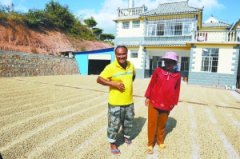
Chinese Coffee--Pu 'er Coffee
Zhang Kui, a farmer from Dakaihe Donghui Forest Society in Nanping Town, Simao District, Pu 'er City, is drying coffee beans in front of a newly built house. There are 19 coffee farmers in the village, and every family is harvesting the joy of harvest. At the coffee purchasing station, coffee of the quality meeting the purchasing requirements is replaced into uniform packaging bags and stored for shipment. Zhang Kui uses a machine to peel coffee fresh fruit in his yard. now is
2014-06-18 Coffee knowledge Pu 'er coffee Chinese coffee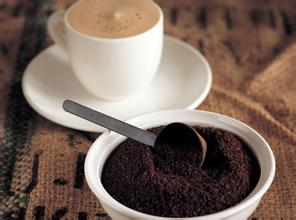
Fine coffee Rwanda Coffee characteristics introduction to Rwanda Coffee
Rwandans have been growing coffee since colonial times, but until 1999, its products were still classified as below Class C and were not popular in the global market. The reason for the poor quality is that farmers do not have a fixed procedure for washing coffee beans and do not process coffee fruits according to specifications in time. Buyers buy coffee beans at $0.33 per kilogram, and farmers keep warm by the meagre profits earned at low prices.
2016-05-15 Boutique coffee Rwanda characteristics introduction Renzi colonization times from
Costa Rican Saint Roman washing fine coffee beans Costa Rican coffee beans
The best coffee in Costa Rica seems to come from small processing plants, spread across several major coffee producing areas, including Tarazu and the western valley. This so-called coffee revolution originated 15 years ago and has greatly changed the way bean baking experts and importers think about Costa Rican coffee. Take the processing plant as the center, collect coffee beans from the surrounding small farms for processing, most of these farms are small societies
2016-05-08 Costa Rica Roman washing boutique coffee beans practice okay
Fine coffee Rwanda coffee manor Rwanda coffee producing area
Rwandans have been growing coffee since colonial times, but until 1999, its products were still classified as below Class C and were not popular in the global market. The reason for the poor quality is that farmers do not have a fixed procedure for washing coffee beans and do not process coffee fruits according to specifications in time. Buyers buy coffee beans at $0.33 per kilogram, and farmers keep warm by the meagre profits earned at low prices.
2016-05-15 Boutique Coffee Rwanda Manor producing area Renzi colonization Times since
Boutique coffee Rwanda coffee flavor red apple, cherry, cinnamon, honey
Rwandans have been growing coffee since colonial times, but until 1999, its products were still classified as below Class C and were not popular in the global market. The reason for the poor quality is that farmers do not have a fixed procedure for washing coffee beans and do not process coffee fruits according to specifications in time. Buyers buy coffee beans at $0.33 per kilogram, and farmers keep warm by the meagre profits earned at low prices.
2016-05-15 Boutique coffee Rwanda flavor red apple cherry cinnamon honey
Introduction to Yunnan Fine Coffee varieties, Flavor, taste, Iron Card, Fine Coffee beans
Speaking of which, I think there should be some judgment on the varieties of coffee in Yunnan. What about the excellent iron pickup and bourbon before? In the new promotion and planting, there are still many hills left to continue to grow old varieties of coffee, but, generally speaking, backward places do not have the protection of origin and a single species, a mountain, 10 families, all kinds of people, a gust of wind blowing, pollen flying everywhere. Oh.
2016-07-18 Yunnan boutique coffee variety flavor taste pickup coffee beans introduction said
The degree of baking is shallow. Medium. Introduction of Bolivian coffee beans suitable for both deep and deep
Generally speaking, high-quality coffee beans from producing countries are more suitable for shallow roasting to medium roasting. It is rare for anyone to re-bake. So as not to empty the flavor. But Bolivian coffee beans have special powers. Shallow. Medium. It is suitable for both depths. I'm not afraid of re-baking. It is quite suitable for French baking with two exploding tails. It tastes mellow and sweet. It has a charming aroma of turpentine and mellow wine. The third wave of counter-cultural coffee in the United States is often roasted in French with Bolivian coffee.
2016-06-28 Roasting degree deep all Bolivia coffee beans introduction general country of production boutique
Fine coffee Rwanda coffee treatment method washing, elevated scaffolding sun drying
Rwandans have been growing coffee since colonial times, but until 1999, its products were still classified as below Class C and were not popular in the global market. The reason for the poor quality is that farmers do not have a fixed procedure for washing coffee beans and do not process coffee fruits according to specifications in time. Buyers buy coffee beans at $0.33 per kilogram, and farmers keep warm by the meagre profits earned at low prices.
2016-05-15 Boutique coffee Rwanda flavor washing viaduct scaffolding sun drying Luwang
Brief introduction of Rwanda Coffee beans how much is the coffee bean per jin
Malaba Coffee (Rwandan: Ikawa ya Maraba, French: Caf de Maraba) is Fairtrade certified coffee grown in the Malaba area of southern Rwanda. Malaba's coffee crop is a bourbon of the Arabica species and is grown in fertile volcanic soil on high-altitude hills. The fruits of coffee trees are mainly picked manually during the rainy season from March to May.
2016-05-04 Rwanda coffee beans super profile less money one jin
The secret behind the world's most expensive coffee
In the earliest days, civet droppings were collected from the wild and mixed with partially digested coffee beans. Gradually, more and more civets were confined to crowded, unsanitary cages on coffee plantations. Photograph: ULET IFANSASTI, GETTY IMAGES Wildlife Conservation Research Centre, University of Oxford and World Conservation Society, a London-based non-profit organisation
2016-08-26 world most expensive coffee after secret
Boutique coffee Rwanda coffee producing area in the western province of Lutexilo
Rwandans have been growing coffee since colonial times, but until 1999, its products were still classified as below Class C and were not popular in the global market. The reason for the poor quality is that farmers do not have a fixed procedure for washing coffee beans and do not process coffee fruits according to specifications in time. Buyers buy coffee beans at $0.33 per kilogram, and farmers keep warm by the meagre profits earned at low prices.
2016-05-15 Boutique coffee Rwanda producing areas western province Texi Renzi colonization